

For this year's brochure, click here.
To view this year's abstract booklet, click here.
Schedule of Events
| 8 a.m. | Registration and Continental breakfast |
| 8:45 a.m. |
Introductions and welcome Dr. Ilhem Messaoudi, acting vice president for research Dr. Prakash Shrestha, Department of Chemistry |
| 9 a.m. |
Dr. Taekjip Ha Boston Children's Hospital, Harvard Medical School. From single molecules to cellular decision making: connecting the scales using mechanical force Abstract: In this lecture, I will describe our effort to understand how the mechanical responses of single molecules contribute to cell fate decision, focusing on our work on integrins, which are mechanosensitive membrane proteins that cells use to interrogate the extracellular environments. |
| 10 a.m. - 10:15 a.m. | Break |
| 10:15 a.m. |
Dr. Laura Finzi Clemson University. Using single-molecule approaches to dissect fundamental cellular processes Abstract: Single molecule techniques are extremely powerful in the investigation of the molecular mechanisms driving emergent behavior in living systems. My lab has pioneered their use and development and combines these approaches to understand, primarily, but not only, transcription regulation. In particular, we study how the physical properties of DNA and chromatin, such as their mechanics and topology, the nucleoprotein complexes that shape the architecture of the genome, the remodeling of DNA by the motor enzymes that process it and phase separation contribute to transmitting information necessary for life. |
| 11:30am - 1:30pm |
Lunch and poster competition Group A - 11:30 a.m. - 12:30 p.m. Group B - 12:30 p.m. - 1:30 p.m. |
| 1:45 p.m. |
Dr. Shixin Liu The Rockefeller University Single-molecule visualization of genetic and epigenetic inheritance Abstract: Genome replication and gene expression are carried out by molecular machines that measure in nanometers and generate forces in piconewtons. My laboratory mainly employs single-molecule fluorescence detection and force manipulation techniques to study these biochemical and mechanical processes that govern genetic and epigenetic inheritance. This approach enables us to follow transient, stochastic and heterogeneous molecular events that are inaccessible by ensemble-averaging methods. By reconstituting DNA/chromatin-based macromolecular complexes and tracking their dynamic behavior in real time, we have gained fresh insights into their physicochemical properties and regulatory mechanisms. |
| 2:45 p.m. - 3 p.m. | Break |
| 3 p.m. |
Dr. Jens H. Gundlach University of Washington Ultra-precise tracking of genomic enzymes with nanopore tweezers Abstract: My group has been at the nexus of developing nanopore sequencing of DNA and establishing nanopores as a new tool for single-molecule biophysics. Much of our work is based on the engineered protein pore MspA. Here, I will show the stunning capabilities of using protein nanopores to observe enzyme mechanics in real-time as these enzymes move along DNA or RNA. We easily achieve 10 times better position and time resolution than optical tweezers while simultaneously measuring the exact nucleotide sequence within the enzyme. I will show hereto unseen detail of the motion of helicases, DNA and RNA polymerases, reverse transcriptases, etc. Besides establishing decisive kinetic enzyme models, our method reveals many surprisingly properties of these enzymes. |
| 4 p.m. | Presentation of poster awards |
| 4:30 p.m. | Close of the 51st Naff Symposium |
Poster Competition - HKRB Atrium
Group A: Even numbered posters will present from 11:30 a.m. - 12:30 p.m.
Group B: Odd numbered posters will present from 12:30 p.m. - 1:30 p.m.
- Thumbtacks are provided.
- Poster dimensions should not exceed 36” tall x 44” wide.
- Register here!
Speakers
|
Biography: Taekjip Ha is George D. Yancopoulos Professor of Pediatrics in honor of Frederick W. Alt at Harvard Medical School and director and senior investigator of the Program in Cellular and Molecular Medicine at Boston Children’s Hospital. He has been an investigator with the Howard Hughes Medical Institute since 2005. He received a bachelor’s in physics from Seoul National University in 1990 and a physics Ph.D. from University of California at Berkeley in 1996. After postdoctoral training at Stanford, he was a physics professor at University of Illinois at Urbana-Champaign (2000-2015), where he co-directed an NSF Physics Frontier Center and Bloomberg Distinguished Professor at Johns Hopkins University (2015-2023). He is a member of the National Academy of Science and the National Academy of Medicine and is a fellow of the American Academy of Arts and Sciences. He received the Ho-Am Prize in Science (2011),the Kazuhito Kinosita Award in single molecule biophysics (2018) and the Barany Award for young investigators (2007). He was named Searle Scholar (2001) and Sloan Fellow (2003). He has served on editorial boards for Science (2011-present), Cell (2009-2020) and eLife (2014-2020). He co-chaired the National Academies committee on Toward Sequencing and Mapping of RNA Modifications (2022-2024). He served as president of the Biophysical Society (2023-2024). Ha’s current research theme is “genome maintenance at higher resolution.” “Higher resolution” refers to advances his team pioneered in multiple axes, including time resolution, spatial resolution, single molecule and single cell resolution and single base pair resolution. His biological focus is genome maintenance, i.e. how the genome is accurately duplicated and repaired for preserving genomic integrity. He advanced CRISPR-based tools in terms of time and space resolution as well as multiplexing and obtained novel insights about repair of CRISPR-generated DNA damage. Because genome maintenance occurs in the context of chromatin and 3D genome, and in the presence of ongoing nuclear processes such as transcription and epigenetic regulation, his team has also been studying how DNA sequences and modifications as well as histone modifications can act directly through changes in biophysical properties of DNA and chromatin such as DNA flexibility and nucleosome stability and condensability. Finally, he used biophysical properties of DNA to develop single molecule force sensors and determined the single molecule force loading rate in cells. |
|
Biography: Laura Finzi is a fellow of the American Physical Society and the Dr. Waenard L. Miller Jr. ’69 and Sheila M. Miller Endowed Chair in Medical Biophysics in the Department of Physics and Astronomy at Clemson University. She is a member of the editorial board of Biophysical Reviews. She received a Laurea in industrial chemistry from the University of Bologna, Italy, and a Ph.D. in chemistry from the University of New Mexico working with Carlos Bustamante. She continued her collaboration with Bustamante as a postdoctoral fellow at the Institute of Molecular Biology in Eugene, Oregon, before joining the group of Dr. Jeff Gelles at Brandeis University. She held academic positions at the University of Milano, Italy, and Emory University. Her career path is featured in The Living Histories Series. She is recognized internationally for her contributions to the understanding of DNA mechanics, topology and physical interactions relevant to transcription regulation. Complete List of Published Work in MyBibliography: http://www.ncbi.nlm.nih.gov/myncbi/browse/collection/40647244/?sort=dat… |
|
Biography: Shixin Liu obtained his B.Sc. in biology from the University of Science and Technology of China and his Ph.D. in chemistry from Harvard University. After postdoctoral work at the University of California at Berkeley, he became a faculty member at the Rockefeller University, where he is now associate professor and heads the Laboratory of Nanoscale Biophysics and Biochemistry. His group studies the dynamic behaviors and interactions of biomolecules, chiefly using single-molecule techniques with a focus on DNA- and chromatin-based molecular machines. He was a recipient of the NIH Director’s New Innovator Award and the Vilcek Prize for Creative Promise in Biomedical Science. |
|
Department of Physics, University of Washington, Seattle, Washington, USA Biography: Jens Gundlach is a professor of physics at the University of Washington. He earned his diploma from the Johannes Gutenberg University in Mainz, Germany, and his Ph.D. (1990) in nuclear physics from the University of Washington. After his Ph.D., he stayed at UW but changed his research field to experimental gravity and precision measurement. In 2002, he began research in biophysics, resulting in the development of nanopore sequencing of DNA and the development of a novel ultra-precise single-molecule tool. Gundlach continues to lead two separate major research efforts at opposite end of physics: gravity and biophysics. He is a fellow of the American Physical Society, received a NIST Precision Measurement Grant, the APS Pipkin Prize and in 2021 the Breakthrough Prize in Fundamental Physics. |
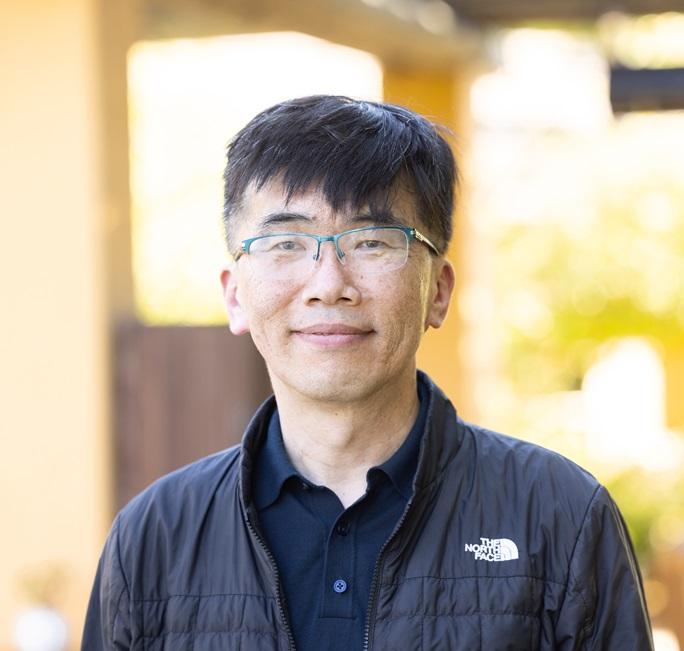 Dr. Taekjip Ha
  Dr. Laura Finzi
 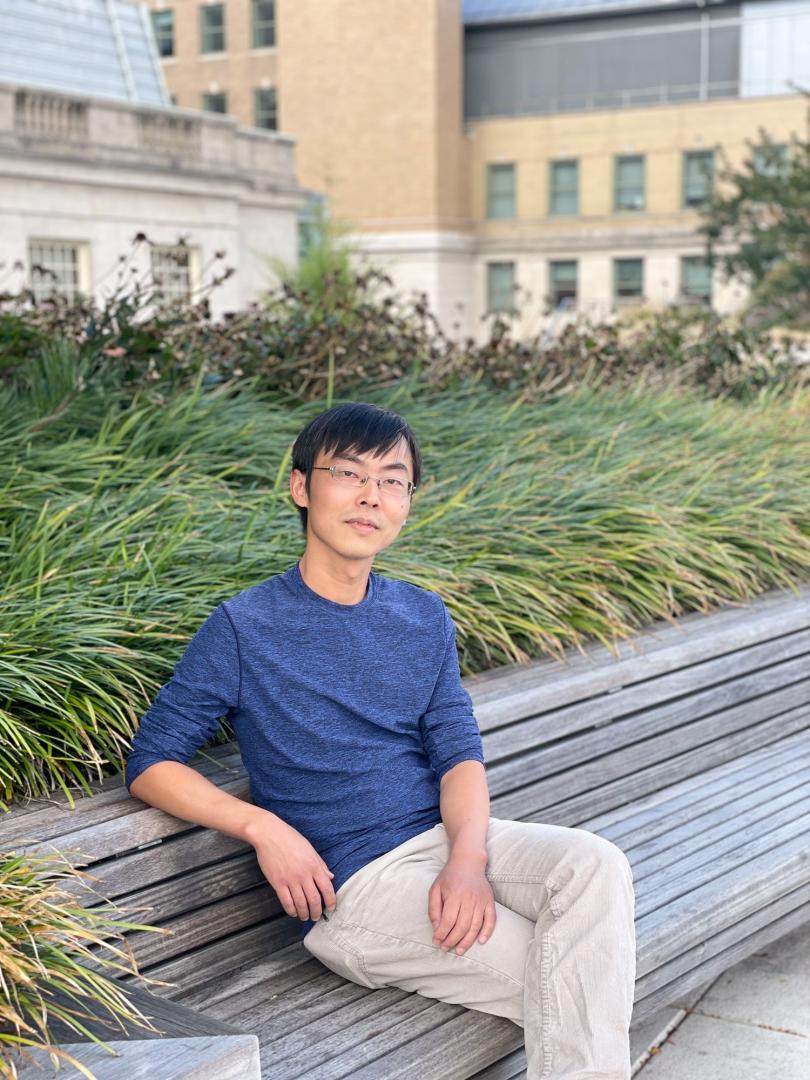 Dr. Shixin Liu
  Dr. Jens H. Gundlach
The Department of Chemistry at the University of Kentucky organizes an annual Symposium on Chemistry and Molecular Biology. This symposium was established in honor of Anna S. Naff, a University of Kentucky graduate, through the generous support of Dr. Benton Naff of NIH. The symposium has an interdisciplinary character and is attended by students and faculty from the Departments of Chemistry, Biochemistry, Biology, Pharmacy, Engineering, Agriculture and Medicine. The symposium features renowned experts from around the world, including Nobel prize-winning scientists, and is attended by faculty and students from colleges and universities in Kentucky and the contiguous states.
2026 Naff Planning Committee
Dr. Prakash Shrestha, Chair, Department of Chemistry.
Dr. Christopher Richards, Department of Chemistry.
Dr. Ryan Cheng, Department of Chemistry.
Dr. Jason DeRouchey, Department of Chemistry.
Dr. Daniel Lee, Department of Neuroscience, Sanders-Brown Center on Aging.