Doctoral Exit Seminar

Exit Seminar: Catalytic Deoxygenation of Oleaginous Biomass to Renewable Diesel and Sustainable Aviation Fuel via Decarboxylation/Decarbonylation

 

Portrait

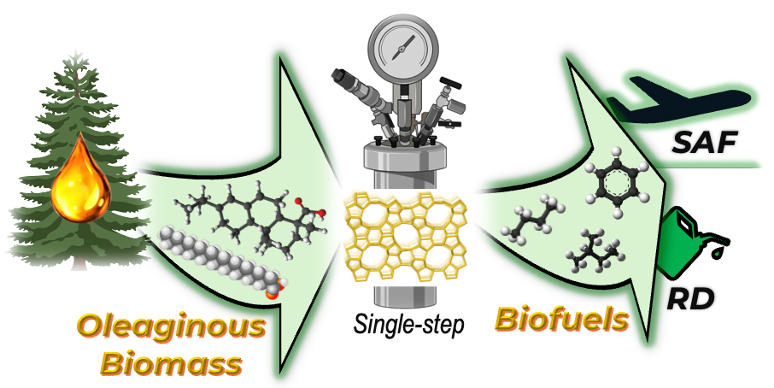
Several technologies have been developed to produce hydrocarbon biofuels – renewable diesel (RD) and sustainable aviation fuel (SAF) – from fats, oils, and greases (FOG), with the hydroprocessing of esters and fatty acids (HEFA) representing one of the most mature pathways. In its current form, HEFA is mainly reliant on the hydrodeoxygenation (HDO) reaction, which has several drawbacks since HDO requires large amounts and pressures of hydrogen, feedstocks of high purity and cost, as well as problematic sulfided catalysts that risk contaminating the biofuel product with sulfur. A process based on decarboxylation/decarbonylation (deCOx) offers an attractive alternative to HDO, since it requires lower amounts and pressures of hydrogen, feedstocks of low purity and cost, and simple supported metal catalysts. Herein, several geographically distributed oleaginous feedstocks – ranging from municipal waste feeds (brown grease) to pine chemicals (tall oil and rosin) – were upgraded to RD and SAF via deCOx. Powdered and engineered Ni-based catalysts were used for FOG-to-RD conversion via deCOx, evaluating deoxygenation over reducible and non-reducible oxides. 
Graphic

Engineered alumina-based catalyst showed superior deoxygenation activity and stability for up to 300 hours on stream. Similarly, quantitative conversion of FOG to SAF was achieved over bifunctional Ni-Cu-based catalysts with zeolitic supports, with deCOx and isomerization occurring in a single step. Initial screening studies performed in a semi-batch reactor revealed that upgrading distilled tall oil (DTO) over a Ni-Cu-based catalyst afforded all types of hydrocarbons comprising SAF, namely n-alkanes, iso-alkanes, cycloalkanes, and aromatics. The same combination of feed, catalyst, and reaction conditions were applied in a fixed-bed reactor for a continuous experiment, consisting of two 72-hour cycles with catalyst regeneration in between. DTO conversion remained quantitative (~100%), with aromatic yields ≥80% regardless of time-on-stream. Most liquid products fell within the carbon number and boiling point range of jet fuel across all samples. Notably, the reaction produced all hydrocarbon classes found in SAF, with particular abundance of aromatic hydrocarbons. Since ~20% aromatics are required to swell elastomeric seals and prevent leaks in aircraft fuel systems, seal compatibility testing confirmed that the aromatics-rich SAF blendstock exhibited a volume swell percentage comparable to qualified SAF blends. Catalysts used for deoxygenation reactions were characterized using various techniques – including N2 physisorption, X-ray diffraction, X-ray photoelectron spectroscopy, microscopy, and temperature-programmed methods – to rationalize trends, propose reaction pathways, and elucidate structure-activity relationships. Finally, to evaluate the economic and environmental feasibility of this technology, techno-economic and lifecycle analyses were conducted on an integrated plant combining catalytic deoxygenation and hydrothermal gasification, producing hydrogen for converting tall oil fatty acid to SAF. The analyses revealed a minimum fuel-selling price of USD$0.39/L – lower than that of existing SAF pathways (USD$1.4/L) – with greenhouse gas emissions of 5.1g CO2-eq/MJ, which is 94% lower than fossil jet fuel (85g CO2-eq/MJ). 

 

Date:
Location:
CP 114

Exit Seminar: Catalytic Deoxygenation of Oleaginous Biomass to Renewable Diesel and Sustainable Aviation Fuel via Decarboxylation/Decarbonylation


Portrait

Several technologies have been developed to produce hydrocarbon biofuels – renewable diesel (RD) and sustainable aviation fuel (SAF) – from fats, oils, and greases (FOG), with the hydroprocessing of esters and fatty acids (HEFA) representing one of the most mature pathways. In its current form, HEFA is mainly reliant on the hydrodeoxygenation (HDO) reaction, which has several drawbacks since HDO requires large amounts and pressures of hydrogen, feedstocks of high purity and cost, as well as problematic sulfided catalysts that risk contaminating the biofuel product with sulfur. A process based on decarboxylation/decarbonylation (deCOx) offers an attractive alternative to HDO, since it requires lower amounts and pressures of hydrogen, feedstocks of low purity and cost, and simple supported metal catalysts. Herein, several geographically distributed oleaginous feedstocks – ranging from municipal waste feeds (brown grease) to pine chemicals (tall oil and rosin) – were upgraded to RD and SAF via deCOx. Powdered and engineered Ni-based catalysts were used for FOG-to-RD conversion via deCOx, evaluating deoxygenation over reducible and non-reducible oxides. 

Graphic

Engineered alumina-based catalyst showed superior deoxygenation activity and stability for up to 300 hours on stream. Similarly, quantitative conversion of FOG to SAF was achieved over bifunctional Ni-Cu-based catalysts with zeolitic supports, with deCOx and isomerization occurring in a single step. Initial screening studies performed in a semi-batch reactor revealed that upgrading distilled tall oil (DTO) over a Ni-Cu-based catalyst afforded all types of hydrocarbons comprising SAF, namely n-alkanes, iso-alkanes, cycloalkanes, and aromatics. The same combination of feed, catalyst, and reaction conditions were applied in a fixed-bed reactor for a continuous experiment, consisting of two 72-hour cycles with catalyst regeneration in between. DTO conversion remained quantitative (~100%), with aromatic yields ≥80% regardless of time-on-stream. Most liquid products fell within the carbon number and boiling point range of jet fuel across all samples. Notably, the reaction produced all hydrocarbon classes found in SAF, with particular abundance of aromatic hydrocarbons. Since ~20% aromatics are required to swell elastomeric seals and prevent leaks in aircraft fuel systems, seal compatibility testing confirmed that the aromatics-rich SAF blendstock exhibited a volume swell percentage comparable to qualified SAF blends. Catalysts used for deoxygenation reactions were characterized using various techniques – including N2 physisorption, X-ray diffraction, X-ray photoelectron spectroscopy, microscopy, and temperature-programmed methods – to rationalize trends, propose reaction pathways, and elucidate structure-activity relationships. Finally, to evaluate the economic and environmental feasibility of this technology, techno-economic and lifecycle analyses were conducted on an integrated plant combining catalytic deoxygenation and hydrothermal gasification, producing hydrogen for converting tall oil fatty acid to SAF. The analyses revealed a minimum fuel-selling price of USD$0.39/L – lower than that of existing SAF pathways (USD$1.4/L) – with greenhouse gas emissions of 5.1g CO2-eq/MJ, which is 94% lower than fossil jet fuel (85g CO2-eq/MJ). 
 

Date:
Location:
CP 114

Exit Seminar: Redox control in a fused bifurcating electron transfer flavoprotein and significance of a H-bond interaction that contributes to flavin redox tuning and activation for covalent modification

Portrait of Debarati Das

In absence of O2 as terminal electron acceptors in anaerobic bacteria and archaea, carbohydrate metabolism is 15 times lesser efficient compared to aerobic energy metabolism resulting in energy deficit conditions. Despite their meager resources these anaerobes, they were able to generate Hand a chemiosmotic potential able to drive energy demanding reactions such as CO2 or N2 fixation. These observations raised concerns as production of high energy reductants (H2) from mediocre fuels (NADH) defied the laws of thermodynamics.

In 2008, a known mechanism “electron bifurcation” but with flavins as redox mediators instead of quinones was able to overcome the thermodynamic problems behind the machinery for H2 production and was termed as flavin based electron bifurcation (FBEB). FBEB couples an energetically uphill electron transfer to a downhill electron transfer, making the process favorable overall while generating high energy reductants from mediocre and abundant fuel.

A relatively simply system that exemplifies FBEB is the bifurcating electron transfer flavoproteins (bETF). bETFs are usually heterodimeric flavoproteins comprised of two subunits- larger EtfA formed by domain I and domain II and smaller EtfB formed by domain III. Domains I and III form the base of the protein whereas domain II sits on top of the base and is known to be dynamic, shuttling towards and away from the base. bETFs contain two non-covalently bound flavins- bifurcating FAD (Bf- FAD) is situated at the interface of domain I and domain III and electron transfer FAD (ET-FAD) is positioned in domain II. Although the two flavins are chemically identical, they demonstrate contrasting reactivities to facilitate an efficient electron bifurcation.

Thus, it is very crucial to understand the molecular basis of this mechanism implemented by these systems (bETFs) naturally which could be applied to man-made devices to satisfy their high energy needs.

Electron gating is a must to facilitate the mechanism which allows only one electron to access the exergonic pathway forcing the second electron to flow in the uphill direction, the major crux of the FBEB mechanism. A conformational gate has been proposed, to enforce this, but differential redox tuning of the two flavins is also required. The polypeptide environment of these bETFs tune the reactivities of the two flavins via non-covalent interactions thus conferring them contrasting reactivities : ET-FAD carries out 1 electron chemistry whereas Bf-FAD does 2 electron chemistry enabling it to capture maximum reducing power from NADH. Free flavins in solution can accumulate up to 1% semiquinone in solution when [OX]=[HQ]. Thus, it is very unique how nature facilitates ways to an efficient mechanism.

These bETFs share several conserved reactions in the ET site that stabilizes the ASQ (anionic semiquinone) state of ET-FAD. The unusually high Eo(OX/ASQ) of ET-FAD has been attributed in part to a 99% conserved Arg and a 100 % conserved Ser or Thr. However, replacement of these does not suffice to suppress the ASQ of the ET-FAD, indicating that the site employs additional interaction(s) as well. 

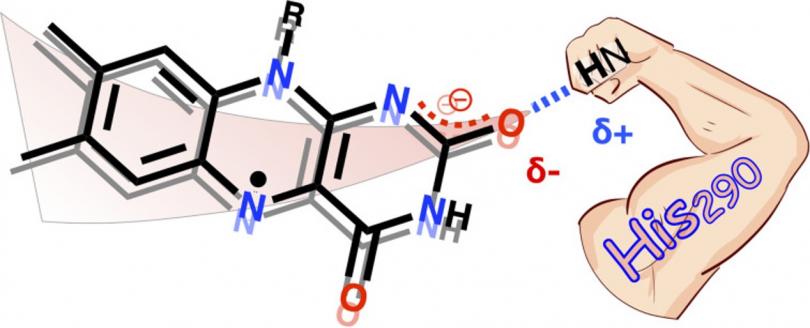
This thesis demonstrates that  a conserved His (H290 in bETF from  Acidaminococcus fermentans) is critical, for the stability of ET-FADASQVariants of bETF in which H290 was replaced demonstrated lower accumulation of ET-FADASQ and perturbation of ET- flavin’s Eo’Ox/SQ by 150 mV and Eo’SQ/HQ by 100 mV. Additionally, we demonstrated that the non-covalent interactions responsible for stabilizing the one electron reactivity of ET-FAD is also responsible for activating the methide intermediate responsible for covalent modification of ET-FAD in these systems.

In this study we have also biochemically characterized a monomeric ETF from a thermophilic archaeon Sulfolobus acidocaldarius showing that it qualifies as a bETF. The SaETF retains optical features unique to reported bETFs drawing attention to similar flavin environments, a must for redox tuning. Moreover, via UV-vis spectroscopy and spectroelectrochemistry we were able to demonstrate the contrasting reactivities of the two flavins.

SaETF model demonstrates conservation of residues in the ET site responsible for modulation of one electron reactivity of ET-FAD in the established heterodimeric ETFs, and an ETEo(OX/ASQ) of -21 mV confirms the stabilization of ETASQ. Finally, SaETF even replicates the side effect of ASQ stabilization that is seen in established ETFs, that the ET-FAD of SaETF is prone to covalent modification. Thus, in ongoing work, we have documented the formation of different covalently modified FADs, showing that the aerobic/anaerobic nature of the atmosphere dictates products formed, and reflected on the potent nucleophile and the reaction mechanism that allows us to refine our prior proposals for the mechanism of flavin modification.

Date:
Location:
CP 114

Exit Seminar: Redox control in a fused bifurcating electron transfer flavoprotein and significance of a H-bond interaction that contributes to flavin redox tuning and activation for covalent modification

Portrait of Debarati Das

In absence of O2 as terminal electron acceptors in anaerobic bacteria and archaea, carbohydrate metabolism is 15 times lesser efficient compared to aerobic energy metabolism resulting in energy deficit conditions. Despite their meager resources these anaerobes, they were able to generate Hand a chemiosmotic potential able to drive energy demanding reactions such as CO2 or N2 fixation. These observations raised concerns as production of high energy reductants (H2) from mediocre fuels (NADH) defied the laws of thermodynamics.

In 2008, a known mechanism “electron bifurcation” but with flavins as redox mediators instead of quinones was able to overcome the thermodynamic problems behind the machinery for H2 production and was termed as flavin based electron bifurcation (FBEB). FBEB couples an energetically uphill electron transfer to a downhill electron transfer, making the process favorable overall while generating high energy reductants from mediocre and abundant fuel.

A relatively simply system that exemplifies FBEB is the bifurcating electron transfer flavoproteins (bETF). bETFs are usually heterodimeric flavoproteins comprised of two subunits- larger EtfA formed by domain I and domain II and smaller EtfB formed by domain III. Domains I and III form the base of the protein whereas domain II sits on top of the base and is known to be dynamic, shuttling towards and away from the base. bETFs contain two non-covalently bound flavins- bifurcating FAD (Bf- FAD) is situated at the interface of domain I and domain III and electron transfer FAD (ET-FAD) is positioned in domain II. Although the two flavins are chemically identical, they demonstrate contrasting reactivities to facilitate an efficient electron bifurcation.

Thus, it is very crucial to understand the molecular basis of this mechanism implemented by these systems (bETFs) naturally which could be applied to man-made devices to satisfy their high energy needs.

Electron gating is a must to facilitate the mechanism which allows only one electron to access the exergonic pathway forcing the second electron to flow in the uphill direction, the major crux of the FBEB mechanism. A conformational gate has been proposed, to enforce this, but differential redox tuning of the two flavins is also required. The polypeptide environment of these bETFs tune the reactivities of the two flavins via non-covalent interactions thus conferring them contrasting reactivities : ET-FAD carries out 1 electron chemistry whereas Bf-FAD does 2 electron chemistry enabling it to capture maximum reducing power from NADH. Free flavins in solution can accumulate up to 1% semiquinone in solution when [OX]=[HQ]. Thus, it is very unique how nature facilitates ways to an efficient mechanism.

These bETFs share several conserved reactions in the ET site that stabilizes the ASQ (anionic semiquinone) state of ET-FAD. The unusually high Eo(OX/ASQ) of ET-FAD has been attributed in part to a 99% conserved Arg and a 100 % conserved Ser or Thr. However, replacement of these does not suffice to suppress the ASQ of the ET-FAD, indicating that the site employs additional interaction(s) as well. 

This thesis demonstrates that  a conserved His (H290 in bETF from  Acidaminococcus fermentans) is critical, for the stability of ET-FADASQVariants of bETF in which H290 was replaced demonstrated lower accumulation of ET-FADASQ and perturbation of ET- flavin’s Eo’Ox/SQ by 150 mV and Eo’SQ/HQ by 100 mV. Additionally, we demonstrated that the non-covalent interactions responsible for stabilizing the one electron reactivity of ET-FAD is also responsible for activating the methide intermediate responsible for covalent modification of ET-FAD in these systems.

In this study we have also biochemically characterized a monomeric ETF from a thermophilic archaeon Sulfolobus acidocaldarius showing that it qualifies as a bETF. The SaETF retains optical features unique to reported bETFs drawing attention to similar flavin environments, a must for redox tuning. Moreover, via UV-vis spectroscopy and spectroelectrochemistry we were able to demonstrate the contrasting reactivities of the two flavins.

SaETF model demonstrates conservation of residues in the ET site responsible for modulation of one electron reactivity of ET-FAD in the established heterodimeric ETFs, and an ETEo(OX/ASQ) of -21 mV confirms the stabilization of ETASQ. Finally, SaETF even replicates the side effect of ASQ stabilization that is seen in established ETFs, that the ET-FAD of SaETF is prone to covalent modification. Thus, in ongoing work, we have documented the formation of different covalently modified FADs, showing that the aerobic/anaerobic nature of the atmosphere dictates products formed, and reflected on the potent nucleophile and the reaction mechanism that allows us to refine our prior proposals for the mechanism of flavin modification.

Date:
Location:
CP 114

Methodological Innovations for Improved Cancer Treatment and Enzyme Activity Insight

The mortality rate of cancer establishes it as a leading global health concern, prompting significant investment into cancer research. While the effects of cancer are well known, the understanding of specific sources of cancer therapy resistance are not. In this study, our goal was to develop innovative methods to address current shortcomings in cancer treatment and understanding. To do this, we studied exosome-mimetic nanovesicles as an immunotherapeutic platform and fluorescence lifetime imaging as a means to measure cancer-associated enzyme activity at a single cell level.

Through the use of a novel method of production, we generated nanovesicles from dendritic cells in high yields and leveraged the antigen-presenting and costimulatory properties of dendritic cells for induction of a T cell immune response. We demonstrate that these nanovesicles are able to present antigens in functional immune stimulatory complexes and retain parental ability to activate CD8+ T cells. Additionally, these nanovesicles were shown to mediate activation of T cells through indirect means. Here, nanovesicles are taken up by bystander dendritic cells, thereby delivering antigen to the dendritic cell and conferring T cell stimulatory capability. Next, we investigated the application of fluorescence lifetime imaging to measure cancer-associated cytochrome P450 enzyme activity at the single-cell level. We demonstrated this approach provides detailed insights into cellular heterogeneity and localized enzyme activity. Additionally, we showed that sensitivity and dynamic range can be tuned to enzyme activity and levels by altering excitation and emission wavelengths.

These advancements offer new and promising avenues to enhance nanoparticle-based immunotherapy and understanding of the role of enzyme activity and cellular heterogeneity in cancer progression. Ultimately, the methods developed contribute to improving therapeutic strategies and personalized medicine.

Date:
Location:
CP 114

Methodological Innovations for Improved Cancer Treatment and Enzyme Activity Insight

The mortality rate of cancer establishes it as a leading global health concern, prompting significant investment into cancer research. While the effects of cancer are well known, the understanding of specific sources of cancer therapy resistance are not. In this study, our goal was to develop innovative methods to address current shortcomings in cancer treatment and understanding. To do this, we studied exosome-mimetic nanovesicles as an immunotherapeutic platform and fluorescence lifetime imaging as a means to measure cancer-associated enzyme activity at a single cell level.

Through the use of a novel method of production, we generated nanovesicles from dendritic cells in high yields and leveraged the antigen-presenting and costimulatory properties of dendritic cells for induction of a T cell immune response. We demonstrate that these nanovesicles are able to present antigens in functional immune stimulatory complexes and retain parental ability to activate CD8+ T cells. Additionally, these nanovesicles were shown to mediate activation of T cells through indirect means. Here, nanovesicles are taken up by bystander dendritic cells, thereby delivering antigen to the dendritic cell and conferring T cell stimulatory capability. Next, we investigated the application of fluorescence lifetime imaging to measure cancer-associated cytochrome P450 enzyme activity at the single-cell level. We demonstrated this approach provides detailed insights into cellular heterogeneity and localized enzyme activity. Additionally, we showed that sensitivity and dynamic range can be tuned to enzyme activity and levels by altering excitation and emission wavelengths.

These advancements offer new and promising avenues to enhance nanoparticle-based immunotherapy and understanding of the role of enzyme activity and cellular heterogeneity in cancer progression. Ultimately, the methods developed contribute to improving therapeutic strategies and personalized medicine.

Date:
Location:
CP 114

Effect of pi-conjugated ligands and A* site organic cations on the energetic properties and photovoltaic performance of metal halide perovskites

Metal halide perovskites have gained interest in optoelectronic applications such as photovoltaics, lasers, LEDs, transistors, and photodetectors due to their excellent semiconducting properties considering their low cost. Metal halide perovskite (HP) photovoltaics have rapidly increased in power conversion efficiency (PCE), which now exceeds 25%. HPs have gained attention in these applications due to their high tolerance towards defects, long charge carrier diffusion lengths, high charge carrier mobility, high optical absorption, and bandgaps that are tunable over a large range. Even though HP photovoltaic PCEs are improved these are still not commercially available due to them showing lower stability and energy loss due to severe charge recombination at the surface and interfaces in the device . Treating the HP surface with surface ligands has become a promising approach to improve photovoltaic performance, defect passivation, and interfacial energetics. In this dissertation,  the influence of ammonium functionalized p – conjugated ligands on MAPbI3 perovskite energetics, photovoltaic performance, and interfacial charge transfer is investigated. With the thiophene ligands, a drastic PCE drop was observed for p-i-n devices, and improved PCE was obtained for n-i-p devices. With PDI surface ligands no significant change was observed for photovoltaic performance.  Two-dimensional metal halide perovskites (2D HP) have captured interest in the field due to their improved stability against air, moisture, and light relative to their 3D counterparts. 2D HPs have a layered structure, where the organic spacer cations are sandwiched between layers of inorganic octahedra. This organic layer in 2D HPs adds additional protection against moisture and oxygen ingression and other degradation pathways . These materials are used as the active layer in LEDs and solar cells and as capping layers in 3D HPs. 2D perovskites demonstrate remarkable structural variabilities, where the properties can be modified by changing the layer thickness, the halide anion, and the spacer cation. To make devices with 2D perovskites we need to understand the influence of the organic spacer cations on the optoelectronic properties of these materials . In this work, we  investigate the influence of the dipole magnitude and the direction of a series of functionalized PEAI derivatives as organic spacer cations on the ionization energy and the electron affinity of 2D tin halide perovskites. However, determining ionization energy and electron affinity in HPs could be quite difficult as several methods are being used in data interpretation for HPs . In this work, we propose a method to assign the energy levels in 2D HPs by correcting for the instrumental resolution in ultraviolet and inverse photoemission spectroscopy.

Date:
Location:
CP 114

Effect of pi-conjugated ligands and A* site organic cations on the energetic properties and photovoltaic performance of metal halide perovskites

Metal halide perovskites have gained interest in optoelectronic applications such as photovoltaics, lasers, LEDs, transistors, and photodetectors due to their excellent semiconducting properties considering their low cost. Metal halide perovskite (HP) photovoltaics have rapidly increased in power conversion efficiency (PCE), which now exceeds 25%. HPs have gained attention in these applications due to their high tolerance towards defects, long charge carrier diffusion lengths, high charge carrier mobility, high optical absorption, and bandgaps that are tunable over a large range. Even though HP photovoltaic PCEs are improved these are still not commercially available due to them showing lower stability and energy loss due to severe charge recombination at the surface and interfaces in the device . Treating the HP surface with surface ligands has become a promising approach to improve photovoltaic performance, defect passivation, and interfacial energetics. In this dissertation,  the influence of ammonium functionalized p – conjugated ligands on MAPbI3 perovskite energetics, photovoltaic performance, and interfacial charge transfer is investigated. With the thiophene ligands, a drastic PCE drop was observed for p-i-n devices, and improved PCE was obtained for n-i-p devices. With PDI surface ligands no significant change was observed for photovoltaic performance.  Two-dimensional metal halide perovskites (2D HP) have captured interest in the field due to their improved stability against air, moisture, and light relative to their 3D counterparts. 2D HPs have a layered structure, where the organic spacer cations are sandwiched between layers of inorganic octahedra. This organic layer in 2D HPs adds additional protection against moisture and oxygen ingression and other degradation pathways . These materials are used as the active layer in LEDs and solar cells and as capping layers in 3D HPs. 2D perovskites demonstrate remarkable structural variabilities, where the properties can be modified by changing the layer thickness, the halide anion, and the spacer cation. To make devices with 2D perovskites we need to understand the influence of the organic spacer cations on the optoelectronic properties of these materials . In this work, we  investigate the influence of the dipole magnitude and the direction of a series of functionalized PEAI derivatives as organic spacer cations on the ionization energy and the electron affinity of 2D tin halide perovskites. However, determining ionization energy and electron affinity in HPs could be quite difficult as several methods are being used in data interpretation for HPs . In this work, we propose a method to assign the energy levels in 2D HPs by correcting for the instrumental resolution in ultraviolet and inverse photoemission spectroscopy.

Date:
Location:
CP 114

Mechanism of Action of Gold-based Anticancer Small Molecules

The current standard of care (platinum-based drugs) for the treatment of different forms of malignancy have been very effective in the clinic, however the negative side effects associated with the administration of these platinum based-drugs remains an unsolved problem. Gold based molecules are among a few metal complexes that have been developed over the years in search for better chemotherapy drugs. While the anticancer mechanism of action of platinum-based drugs is well known to involve DNA damage, the mechanism of action of gold based small molecules remains a subject of debate. It is understood that gold-based complexes exhibit non-cisplatin like anticancer mechanism of action, hence the potential to overcome resistance seen in patients with recurrent tumors after initial remission with platinum-based drugs. Herein, we report efforts to elucidate the mechanism of action of novel gold-based anticancer agents with very potent inhibitory effect against triple negative breast cancers and ovarian cancer. A recurring observation from the mechanism of action studies is the perturbation of mitochondria physiology by these complexes. These includes; perturbation of mitochondria bioenergetics, depolarization of mitochondria membrane potential of the cells, increased mitochondria ROS production, depletion of mitochondria DNA, and disruption of mitochondria dynamics. Modified versions of the lead molecules were developed as probes to monitor in vitro localization of the complexes and facilitate elucidation of the mechanism of action. Target identification studies with a biotinylated lead complex unveiled heme oxygenase 2 (HMOX2) as a novel target in gold medicinal chemistry. Preliminary target validation studies revealed for the first time, HMOX2 as an upstream regulator of the MYC proto-oncogene. These findings uncover a new strategy for targeting tumor cells and reinforces the belief that small molecules can serve as probes to interrogate the complex cancer biology system and unveil new strategies for development of better chemotherapeutic agents.

Date:
Location:
CP 114

Mechanism of Action of Gold-based Anticancer Small Molecules

The current standard of care (platinum-based drugs) for the treatment of different forms of malignancy have been very effective in the clinic, however the negative side effects associated with the administration of these platinum based-drugs remains an unsolved problem. Gold based molecules are among a few metal complexes that have been developed over the years in search for better chemotherapy drugs. While the anticancer mechanism of action of platinum-based drugs is well known to involve DNA damage, the mechanism of action of gold based small molecules remains a subject of debate. It is understood that gold-based complexes exhibit non-cisplatin like anticancer mechanism of action, hence the potential to overcome resistance seen in patients with recurrent tumors after initial remission with platinum-based drugs. Herein, we report efforts to elucidate the mechanism of action of novel gold-based anticancer agents with very potent inhibitory effect against triple negative breast cancers and ovarian cancer. A recurring observation from the mechanism of action studies is the perturbation of mitochondria physiology by these complexes. These includes; perturbation of mitochondria bioenergetics, depolarization of mitochondria membrane potential of the cells, increased mitochondria ROS production, depletion of mitochondria DNA, and disruption of mitochondria dynamics. Modified versions of the lead molecules were developed as probes to monitor in vitro localization of the complexes and facilitate elucidation of the mechanism of action. Target identification studies with a biotinylated lead complex unveiled heme oxygenase 2 (HMOX2) as a novel target in gold medicinal chemistry. Preliminary target validation studies revealed for the first time, HMOX2 as an upstream regulator of the MYC proto-oncogene. These findings uncover a new strategy for targeting tumor cells and reinforces the belief that small molecules can serve as probes to interrogate the complex cancer biology system and unveil new strategies for development of better chemotherapeutic agents.

Date:
Location:
CP 114